The short answer: yes, some younger women with an early cancer of the cervix, ovary or womb can keep the chance of having a baby later. Options include surgery that keeps the womb or one ovary, hormone treatment for some very early womb cancers, and freezing eggs or embryos before treatment. These are suitable only for selected small, early, low-grade cancers, and a pregnancy cannot be guaranteed. Say that you hope to have children at your very first appointment, before any surgery, chemotherapy or radiotherapy is planned.
Families often search for this as cancer ke baad pregnancy or kya cancer ke baad maa ban sakte hain (क्या कैंसर के बाद माँ बन सकते हैं). Below are five common myths that can delay or block fertility-preserving treatment when it is actually possible.
On this page
- 1. Myth: A cancer diagnosis means no chance of biological children
- 2. Myth: Fertility preservation increases the risk of recurrence
- 3. Myth: Only single, young women qualify
- 4. Myth: Fertility-preserving surgery is the same as IVF preservation
- 5. Myth: You have time to decide after starting treatment
1. Myth: A cancer diagnosis means no chance of biological children
For selected early-stage cervical, ovarian and womb (endometrial) cancers, there are options that keep fertility. In carefully selected women, cancer results are similar to standard treatment; outside strict limits, keeping the womb or an ovary can lower the chance of cure. See fertility-preserving surgery in selected patients for who is eligible. The chance is time-limited: it must be discussed before surgery, not after.
2. Myth: Fertility preservation increases the risk of recurrence
In carefully selected women who meet strict criteria, fertility-preserving treatment has shown recurrence rates similar to standard surgery. The main options are radical trachelectomy (removing the cervix and the tissue around it but keeping the womb), removing only the affected ovary and tube (unilateral salpingo-oophorectomy), and, for some very early womb cancers, hormone tablets or a hormone coil (progestogens) with a repeat biopsy about every 3 months. Selection is the key: larger, high-grade or more advanced cancers carry a higher risk.
For cervical cancer, ask whether a trachelectomy will be open or keyhole (laparoscopic or robotic) surgery. A large 2018 study (the LACC trial) found worse survival with keyhole and robotic radical hysterectomy than with open surgery, so the approach for a radical trachelectomy is chosen carefully and open surgery is often preferred. The robot is not automatically the better choice.
3. Myth: Only single, young women qualify
Fertility preservation is discussed for any woman of reproductive age (typically up to 40-42) who has not completed her family — married or single. Reproductive intent matters more than marital status.
4. Myth: Fertility-preserving surgery is the same as IVF preservation
These are different. Fertility-preserving surgery keeps the womb: for example, a radical trachelectomy removes the cervix but keeps the womb, and ovary-sparing surgery keeps one ovary, so that pregnancy may happen naturally or with fertility treatment later. Egg or embryo freezing (an IVF technique) collects and stores eggs before chemotherapy, radiotherapy or surgery. Egg freezing does not need a partner and often takes about 2 weeks; embryo freezing needs a partner’s or donor sperm. The two can be used together.
5. Myth: You have time to decide after starting treatment
Fertility-preserving options must be considered before treatment begins. Once the womb and ovaries are removed, or after chemotherapy or pelvic radiotherapy (sikai) that can damage the ovaries, the options narrow a lot. Raising the question at the first visit usually allows egg freezing to be arranged without a harmful delay to cancer treatment.
What to do next
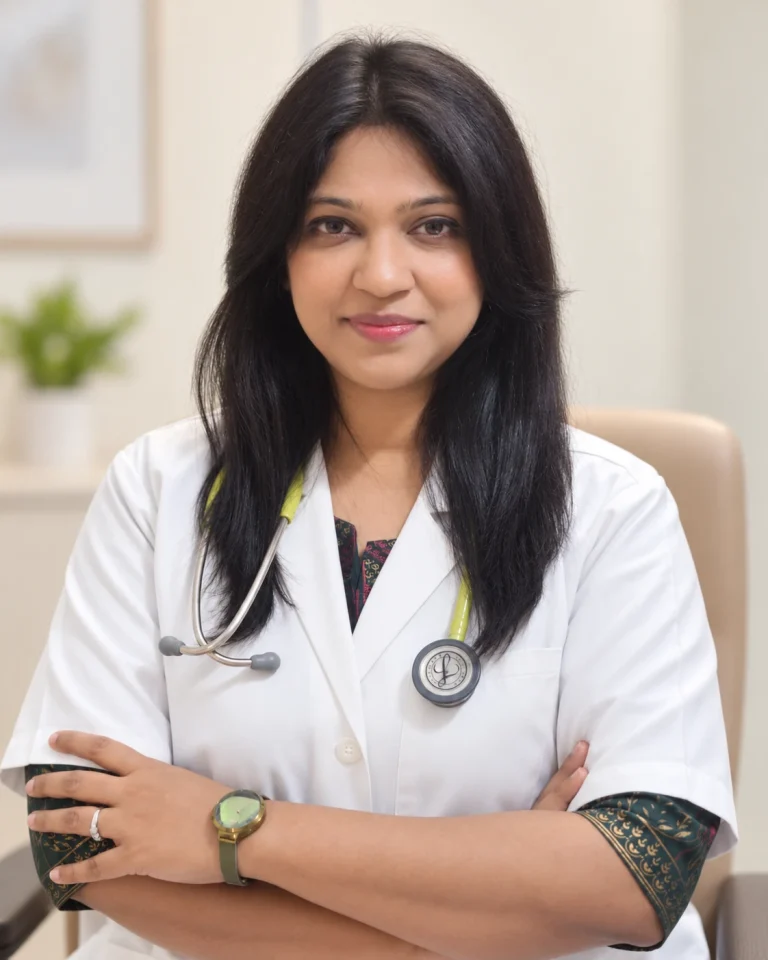
If you have been diagnosed with a gynaecological cancer and hope to have children, ask for an early consultation, before any treatment starts. You can book an appointment with Dr. Nishtha Tripathi Patel (in person in Ahmedabad or by video) or send your reports on WhatsApp +91 76988 00333 so the team can arrange the right appointment. For the reports to take, see preparing for a specialist appointment; for the questions to ask, see fertility-preserving cancer surgery: 8 questions to ask.
Related
External reference: ESGO Fertility-Sparing Treatment Guidelines.
FAQs
Can I get pregnant after cervical cancer?
Some women can. If the cancer is small and early (usually 2 cm or less, with no spread to the lymph nodes), a radical trachelectomy may keep the womb; the very smallest cancers may need only a cone biopsy. Pregnancies afterwards need specialist care and a planned caesarean. Larger cancers usually need treatment that ends fertility, so egg freezing may be discussed before it starts.
Can I get pregnant after ovarian cancer?
Some women can. If an early cancer is confined to one ovary and is of a favourable type, removing only that ovary and tube, after careful staging surgery, may keep the womb and the other ovary. Removing the remaining ovary and the womb is usually advised once the family is complete.
Can early womb cancer be treated without removing the womb?
Sometimes. For grade 1 endometrioid cancer that has not grown into the womb muscle on MRI, hormone treatment (progestogens) may be tried, with a repeat biopsy about every 3 months. It is not a cure on its own, and a hysterectomy is advised once childbearing is complete.
How long does egg freezing take before chemotherapy?
It often takes about 2 weeks and is arranged with a fertility specialist. In most cases it can be done without delaying cancer treatment. Egg freezing does not need a partner; embryo freezing needs a partner’s or donor sperm.
Does fertility-preserving treatment make the cancer more likely to come back?
In carefully selected women, the risk is similar to standard surgery. Outside strict criteria the risk is higher, so it is offered only when your reports show it is a safe option. Close follow-up is essential.
Reviewed by Dr. Nishtha Tripathi Patel, MBBS, DGO, DNB, Fellowship Gynaecological Oncology, ESGO-certified.