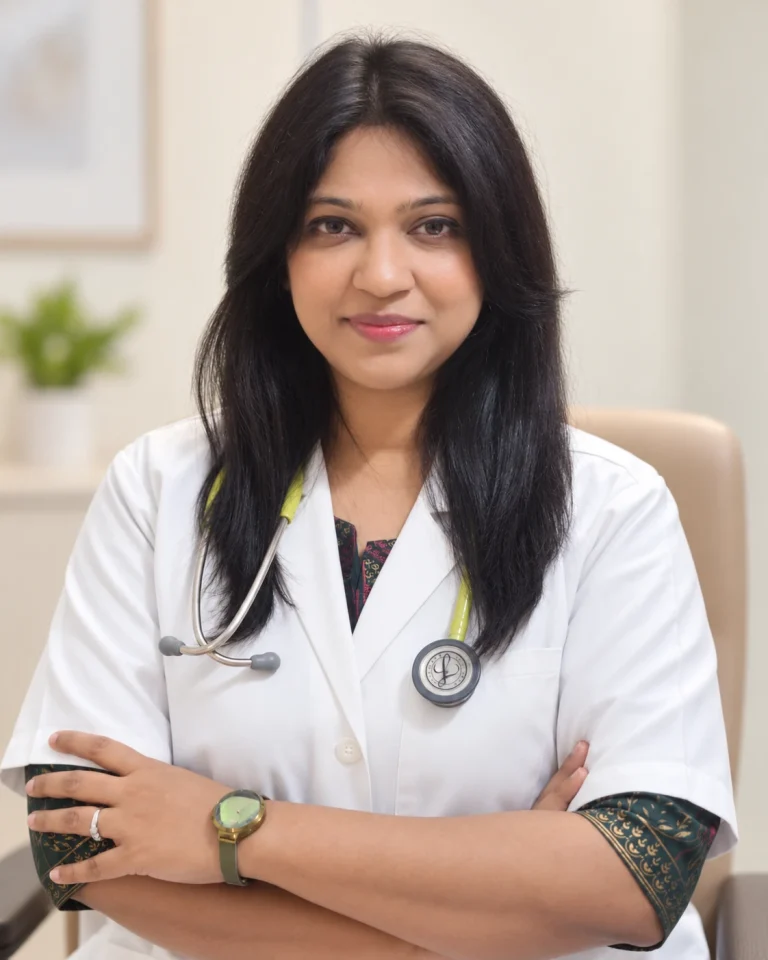
The short answer: For a small number of carefully chosen women with early cancer of the cervix, ovary or womb, it is possible to treat the cancer and still keep the womb or one ovary, so that pregnancy remains possible. Whether this is safe depends on the type of cancer, its size, stage and grade, which a gynaecological oncologist checks with scans and the biopsy report before any operation. Many families search for this as kya cancer ke baad maa ban sakte hain (क्या कैंसर के बाद माँ बन सकते हैं). If fertility-preserving treatment is not safe for you, freezing eggs or embryos before treatment may still be possible. Dr. Nishtha Tripathi Patel, an ESGO-certified gynaecological oncologist, sees patients and operates at Sterling Hospitals, Sindhubhavan Road, Ahmedabad.
On this page
- What is fertility-preserving cancer surgery?
- Why Sterling Hospitals for this surgery
- Who is a candidate
- What to expect
- How to book
- FAQs
What is fertility-preserving cancer surgery?
Standard surgery for most gynaecological cancers removes the womb and both ovaries, which ends the chance of pregnancy. Fertility-preserving surgery is a smaller, carefully chosen alternative for some early cancers. The main options are:
- Early cervical cancer (bachedani ke muh ka cancer): a radical trachelectomy removes the cervix (the neck of the womb) and the tissue around it but keeps the body of the womb, so pregnancy is still possible. It suits only selected small tumours, usually 2 cm or less. A stitch is placed to support a future pregnancy, and the baby is delivered by planned caesarean section. It can be done as open or keyhole (laparoscopic or robotic) surgery. As with radical hysterectomy, keyhole or robotic surgery is not equally safe for every cervical cancer, so the robot is not automatically the better choice; the approach is chosen carefully.
- Early ovarian cancer (andashay ka cancer): in selected stage IA cancers of a favourable type, only the affected ovary and tube are removed (unilateral salpingo-oophorectomy), together with careful staging, while the womb and the other ovary are kept.
- Early womb (endometrial) cancer: for selected grade 1 cancers that have not grown into the womb muscle (no myometrial invasion), hormone treatment (progestogens) may be used for a time instead of a hysterectomy, with a repeat biopsy about every 3 months. A hysterectomy is usually advised once your family is complete.
Strict selection and close follow-up are essential; this approach is not right for everyone.
At Sterling Hospitals, the surgery is planned and performed by Dr. Nishtha Tripathi Patel, an ESGO-certified gynaecological oncosurgeon, with multidisciplinary input from medical oncology, radiation oncology, anaesthesia, pathology and radiology.
For broader information, see our guide to fertility-preserving surgery in selected patients, including who is eligible and its limits, and our page on cervical cancer diagnosis and care. Authoritative external guidance: ESGO Fertility Sparing Treatment guidelines and PubMed: Fertility-sparing surgery in gynaecological cancers — outcomes review.
Why Sterling Hospitals, Sindhubhavan Road for fertility-preserving cancer surgery?
Sterling Hospitals offers robotic surgery (da Vinci platform), cytoreductive surgery, HIPEC and PIPAC; robotic surgery and HIPEC are also available at KD Hospital. Specifically for fertility-preserving cancer surgery, the centre offers multidisciplinary tumour board, da Vinci robotic platform, advanced imaging, on-site pathology. These features matter for cancer surgery because:
- Single-team continuity: Dr. Nishtha personally manages your case from consultation through surgery and follow-up. You do not get passed between rotating team members.
- Multidisciplinary tumour board: complex cases are discussed jointly with medical oncology, radiation oncology, pathology and radiology before final treatment decisions.
- Established infrastructure: Sterling Hospitals’s multidisciplinary tumour board, da Vinci robotic platform, advanced imaging, on-site pathology mean intra-operative imaging, frozen-section pathology, and post-operative critical care are available on site.
- Proximity for patients in west Ahmedabad: Bodakdev, Satellite, SG Highway, Vastrapur, Prahlad Nagar, Thaltej, Bopal reach the hospital within a short drive, making post-op follow-up logistically simple.
Who is a candidate for fertility-preserving cancer surgery?
Fertility-preserving treatment may be considered for selected early cancers in younger women who wish to keep the option of a future pregnancy. In general this means: cervical cancer at stage IA2–IB1 with a tumour 2 cm or less and no spread to the lymph nodes; ovarian cancer at stage IA of a favourable type, confined to one ovary; or womb (endometrial) cancer that is grade 1 endometrioid with no growth into the womb muscle on MRI. Women with high-grade or more advanced cancer, or cancer in the lymph nodes, are usually not suitable, because the risk to life is too high. The decision is individualised after review of:
- Histopathology / biopsy reports confirming diagnosis and grade
- Imaging (ultrasound, CT or MRI) to assess local extent and stage
- Tumour markers (CA-125, CEA, HE4 — where relevant)
- Performance status, comorbidities and patient preferences (including fertility wishes)
- Prior treatment history (neoadjuvant chemotherapy, prior surgery)
For an individualised assessment, please bring all of these reports to your consultation, or share them on WhatsApp in advance. If this is your first visit, our guide to preparing for a specialist appointment can help you get ready.
What to expect with fertility-preserving cancer surgery
When it is the right choice, fertility-preserving surgery aims to keep the possibility of pregnancy without lowering the chance of cure for carefully selected women; it is not right for everyone, and careful planning by a multidisciplinary team is what makes it safe. The typical patient journey at Sterling Hospitals looks like this:
- Initial consultation — review of reports, examination, plan discussion (45–60 minutes).
- Investigations — any additional imaging or tests required to complete staging.
- Multidisciplinary discussion — case reviewed at tumour board where appropriate.
- Surgery planning — admission, pre-op review with anaesthesia, consent discussion.
- Surgery and recovery — procedure performed at Sterling Hospitals; the hospital stay depends on the operation and is usually shorter after keyhole surgery than after open surgery. Hormone treatment for early womb cancer does not need an operation or a hospital stay.
- Fertility advice — if needed, referral to a fertility specialist to discuss egg or embryo freezing, which often takes about 2 weeks and is arranged before treatment starts.
- Follow-up — first review at 1–2 weeks post-discharge, then 3-monthly for 2 years, then 6-monthly to year 5.
Possible risks and alternatives
Like any operation, fertility-preserving surgery carries risks such as bleeding, infection and blood clots, which your surgeon will explain for your situation. Because the womb or an ovary is kept, regular follow-up is essential, and some women later need further treatment or surgery. After a trachelectomy, a pregnancy needs close care because miscarriage and early (preterm) birth are more likely, and the baby is delivered by caesarean section. After hormone treatment for early womb cancer, the cancer can come back, so a hysterectomy is usually advised once your family is complete.
If fertility-preserving treatment is not safe for you, the usual alternative is standard treatment, such as removing the womb and ovaries or, for some cervical cancers, chemoradiation (sikai with chemotherapy). Egg or embryo freezing before treatment, arranged with a fertility specialist, may still keep the chance of a biological child.
How to book fertility-preserving cancer surgery at Sterling Hospitals, Sindhubhavan Road
Consultations for fertility-preserving cancer surgery with Dr. Nishtha at Sterling Hospitals are by prior appointment. To book:
- Call or WhatsApp: +91 76988 00333
- Online: Book an appointment
- Second opinion: Request a free 10-minute report review
For patients travelling from outside Ahmedabad, mention this at booking so the team can group consultation, investigations, and pre-op work-up into the fewest possible visits.
FAQs — Fertility-Preserving Cancer Surgery at Sterling Hospitals, Sindhubhavan Road
Where exactly is Sterling Hospitals and how do I reach it for a fertility-preserving cancer surgery consultation?
Sterling Hospitals is located at Sindhubhavan Road in Ahmedabad. The hospital is reachable from Bodakdev, Satellite, SG Highway, Vastrapur, Prahlad Nagar, Thaltej, Bopal within a comfortable drive. Patients arriving from outside Ahmedabad can plan a single-day consultation by booking in advance on +91 76988 00333.
Why choose Sterling Hospitals for fertility-preserving cancer surgery rather than a generalist?
Sterling Hospitals offers robotic surgery (da Vinci platform), cytoreductive surgery, HIPEC and PIPAC. Dr. Nishtha Tripathi Patel performs fertility-preserving cancer surgery here with full multidisciplinary support — multidisciplinary tumour board, da Vinci robotic platform, advanced imaging, on-site pathology. This combination of specialist surgeon, dedicated oncology infrastructure, and tumour-board case review is associated with better outcomes than non-specialist settings.
Who is a candidate for fertility-preserving cancer surgery at Sterling Hospitals?
Fertility-preserving surgery may be considered for selected early-stage cervical, ovarian and endometrial cancers in younger women who wish to keep the option of a future pregnancy. It is not suitable for high-grade, larger or more advanced cancers. Eligibility is confirmed after review of imaging (ultrasound, CT or MRI), biopsy or histopathology reports, and tumour markers. A consultation with Dr. Nishtha allows a personalised treatment plan to be formulated.
How long is the hospital stay after fertility-preserving cancer surgery at Sterling Hospitals?
It depends on which operation you have. Removing one ovary and tube by keyhole surgery usually needs a short stay (often about 3–4 days after keyhole surgery), while an open radical trachelectomy needs a longer stay. Hormone treatment for early womb cancer is taken as tablets or a hormone coil and does not need a hospital stay. Dr. Nishtha’s team plans discharge individually.
Can I get a second opinion before deciding on fertility-preserving cancer surgery at Sterling Hospitals?
Yes. Dr. Nishtha provides independent second opinions on diagnosis, staging, and proposed treatment plans. You can share reports on WhatsApp (+91 76988 00333) before the consultation so the meeting focuses on your specific decision.
Is robotic surgery better for fertility-preserving cancer surgery?
Not automatically. The robot is a tool; it does not by itself make cancer surgery safer. For selected early ovarian cancer, keyhole (laparoscopic or robotic) surgery may be suitable. For cervical cancer, a large 2018 study (the LACC trial) found worse survival with keyhole and robotic radical hysterectomy than with open surgery, so for a radical trachelectomy the approach is chosen carefully and open surgery is often preferred. Robotic surgery is available at Sterling Hospitals and KD Hospital, and Dr. Nishtha will explain which approach suits you.
Does fertility-preserving surgery lower my chance of cure?
For carefully selected women with small, early, low-grade cancers, results are similar to standard surgery when the cancer has been fully staged by a gynaecological oncologist. For larger, high-grade or more advanced cancers the risk is higher, which is why fertility-preserving surgery is not offered to everyone.
Medical content reviewed by Dr. Nishtha Tripathi Patel, MBBS, DGO, DNB, Fellowship Gynaecological Oncology, ESGO-certified.