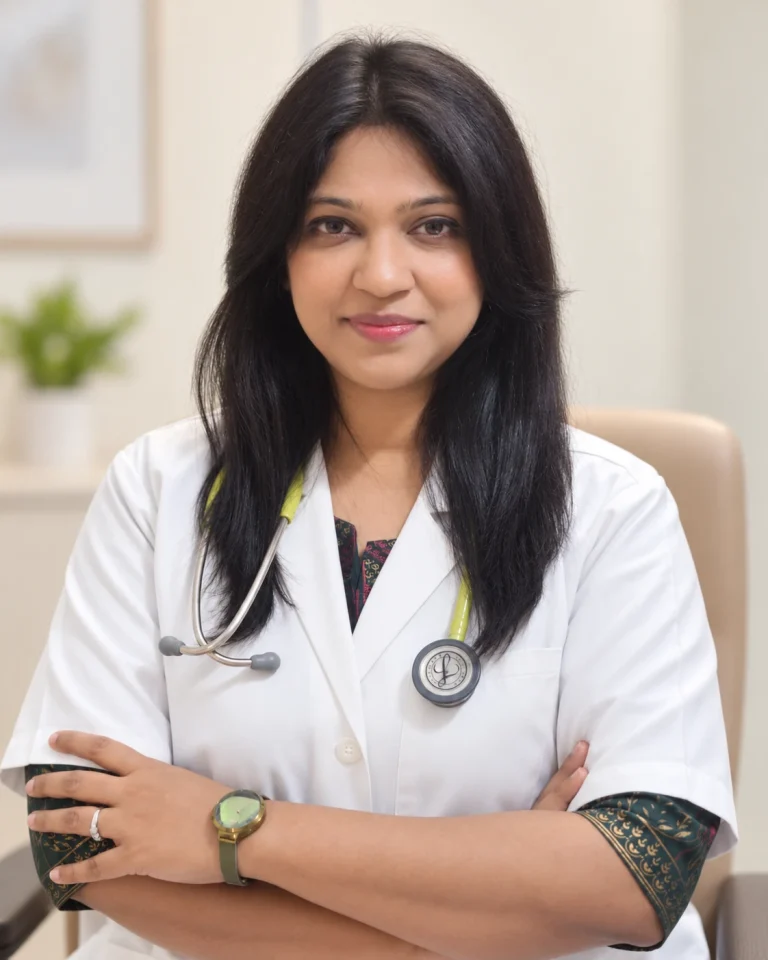
The short answer: Surgery is the main treatment for most ovarian cancers (andashay ka cancer, अंडाशय का कैंसर; often searched as ovary cancer ka operation). The aim is to remove all the cancer that can be seen, because leaving no visible cancer behind gives the best chance of controlling it. For early cancer this is a staging operation; for advanced cancer it is a longer cytoreductive (debulking) operation, done either first or after about 3 cycles of chemotherapy. Many women also need chemotherapy after surgery. Dr. Nishtha Tripathi Patel, an ESGO-certified gynaecological oncologist, operates at KD Hospital, Vaishnodevi Circle, SG Highway, Ahmedabad, where robotic surgery and HIPEC (heated chemotherapy, garam chemo) are available for the selected women who need them.
On this page
- What is ovarian cancer surgery?
- Why KD Hospital for this surgery
- Who is a candidate
- What to expect
- How to book
- FAQs
What is ovarian cancer surgery?
Ovarian cancer surgery has two jobs: to find out exactly how far the cancer has spread (staging) and to remove all the cancer that can be seen. The exact operation depends on the stage, your age and general health, whether you hope to have children, and whether chemotherapy has been given first.
- Early-stage cancer: staging surgery usually removes the womb, both ovaries and tubes and the fatty apron inside the abdomen (omentum), with samples from the lining of the abdomen and, where needed, the lymph nodes (glands). In young women with selected stage IA cancer, keeping the womb and the other ovary may be possible (fertility-sparing surgery). Keyhole (laparoscopic or robotic) surgery may suit selected early cancers.
- Advanced cancer (stage 3 or 4): cytoreductive or debulking surgery is a longer, open operation that may also remove parts of the bowel, the lining of the abdomen or other affected tissue. It is done either first (primary surgery) or after about 3 cycles of chemotherapy (interval surgery). HIPEC (heated chemotherapy washed through the abdomen during the operation, garam chemo) is added for selected women with stage 3 (sometimes 4) cancer when all visible tumour can be removed and they are fit enough; it is not needed for everyone and is not a guaranteed cure.
Leaving no visible cancer behind (complete cytoreduction) is one of the most important factors in how well treatment works, which is why this operation should be planned and done by a gynaecological oncologist.
At KD Hospital, the operation is planned and performed by Dr. Nishtha Tripathi Patel, an ESGO-certified gynaecological oncosurgeon, with multidisciplinary input from medical oncology, radiation oncology, anaesthesia, pathology and radiology.
For context, see our guide to ovarian cancer diagnosis and treatment and our page on cytoreductive (debulking) surgery. Authoritative external guidance: ESGO/ESMO/ESP Consensus Conference recommendations for ovarian cancer and National Cancer Institute Ovarian Cancer Treatment Summary.
Why KD Hospital, Vaishnodevi Circle, SG Highway for ovarian cancer surgery?
KD Hospital is a well-established multi-specialty hospital with comprehensive oncology, advanced imaging and pathology support. Specifically for ovarian cancer surgery, the centre offers advanced imaging suite, on-site pathology, dedicated oncology ward, well-equipped surgical theatres. KD Hospital also has a surgical robot, and HIPEC with cytoreductive surgery is done here for selected women. These features matter for cancer surgery because:
- Single-team continuity: Dr. Nishtha personally manages your case from consultation through surgery and follow-up. You do not get passed between rotating team members.
- Multidisciplinary tumour board: complex cases are discussed jointly with medical oncology, radiation oncology, pathology and radiology before final treatment decisions.
- Established infrastructure: KD Hospital’s advanced imaging suite, on-site pathology, dedicated oncology ward, well-equipped surgical theatres mean intra-operative imaging, frozen-section pathology, and post-operative critical care are available on site.
- Proximity for patients in west Ahmedabad: Gota, Vandematram, Chandlodia, north-west Ahmedabad reach the hospital within a short drive, making post-op follow-up logistically simple.
Who is a candidate for ovarian cancer surgery?
Surgery is considered for most stages of ovarian, fallopian tube and primary peritoneal cancer, and for selected rarer types (germ cell and sex cord-stromal tumours). Not everyone needs, or is helped by, an operation straight away: if the cancer is very widespread or you are unwell, chemotherapy is usually given first and surgery is planned if the cancer shrinks. The decision is individualised after review of:
- Histopathology / biopsy reports confirming diagnosis and grade
- Imaging (ultrasound, CT or MRI) to assess local extent and stage
- Tumour markers (CA-125, CEA, HE4 — where relevant)
- Performance status, comorbidities and patient preferences (including fertility wishes)
- Prior treatment history (neoadjuvant chemotherapy, prior surgery)
For an individualised assessment, please bring all of these reports to your consultation, or share them on WhatsApp in advance. Our checklist on preparing for a specialist appointment lists what to bring, including any earlier scans and CA-125 results.
What to expect with ovarian cancer surgery
When surgery is the right choice, removing all visible cancer gives the best chance of controlling ovarian cancer, and gynaecological oncology surgical teams achieve this more often than general surgical teams. The typical patient journey at KD Hospital looks like this:
- Initial consultation — review of reports, examination, plan discussion (45–60 minutes).
- Investigations — any additional imaging or tests required to complete staging.
- Multidisciplinary discussion — case reviewed at tumour board where appropriate.
- Surgery planning — admission, pre-op review with anaesthesia, consent discussion.
- Surgery and recovery — procedure performed at KD Hospital. After keyhole staging surgery the stay is often about 3–4 days. After open cytoreductive surgery it is about 10–14 days; with HIPEC, about 10–14 days including 3–5 days in intensive care (ICU). After major surgery, gentle activity is usually possible within about 4–6 weeks and full recovery takes about 3–4 months.
- Chemotherapy — many women need chemotherapy (usually carboplatin and paclitaxel every 3 weeks, 6 cycles in total), given by the medical oncology team once you have recovered from surgery, or partly before and partly after interval surgery.
- Follow-up — first review at 1–2 weeks post-discharge, then 3-monthly for 2 years, then 6-monthly to year 5.
Possible risks and alternatives
Ovarian cancer surgery is a major operation. Risks include bleeding, infection, blood clots, slow return of bowel function and, when part of the bowel is removed, occasionally a temporary or permanent stoma (a bag on the tummy). Removing both ovaries causes menopause in women who have not yet reached it. Your surgeon will explain which risks apply to your operation.
If surgery is not possible straight away, chemotherapy first (neoadjuvant chemotherapy) is the usual alternative, with surgery planned if the cancer shrinks. Surgery is not always the right choice for every woman, and the plan depends on your scans, your health and your wishes.
How to book ovarian cancer surgery at KD Hospital, Vaishnodevi Circle, SG Highway
Consultations for ovarian cancer surgery with Dr. Nishtha at KD Hospital are by prior appointment. To book:
- Call or WhatsApp: +91 76988 00333
- Online: Book an appointment
- Second opinion: Request a free 10-minute report review
For patients travelling from outside Ahmedabad, mention this at booking so the team can group consultation, investigations, and pre-op work-up into the fewest possible visits.
FAQs — Ovarian Cancer Surgery at KD Hospital, Vaishnodevi Circle, SG Highway
Where exactly is KD Hospital and how do I reach it for a ovarian cancer surgery consultation?
KD Hospital is located at Vaishnodevi Circle, SG Highway in Ahmedabad. The hospital is reachable from Gota, Vandematram, Chandlodia, north-west Ahmedabad within a comfortable drive. Patients arriving from outside Ahmedabad can plan a single-day consultation by booking in advance on +91 76988 00333.
Why choose KD Hospital for ovarian cancer surgery rather than a generalist?
KD Hospital is a well-established multi-specialty hospital with comprehensive oncology, advanced imaging and pathology support. Dr. Nishtha Tripathi Patel performs ovarian cancer surgery here with full multidisciplinary support — advanced imaging suite, on-site pathology, dedicated oncology ward, well-equipped surgical theatres. This combination of specialist surgeon, dedicated oncology infrastructure, and tumour-board case review is associated with better outcomes than non-specialist settings.
Who is a candidate for ovarian cancer surgery at KD Hospital?
Surgery is considered for most stages of ovarian, fallopian tube and primary peritoneal cancer, and for selected rarer types; some women have chemotherapy first and surgery afterwards. Eligibility is confirmed after review of imaging (ultrasound, CT or MRI), biopsy or histopathology reports, tumour markers such as CA-125, and your general fitness. A consultation with Dr. Nishtha allows a personalised treatment plan to be formulated.
How long is the hospital stay after ovarian cancer surgery at KD Hospital?
It depends on the operation. After keyhole staging surgery the stay is often about 3–4 days. After open cytoreductive (debulking) surgery it is usually about 10–14 days, and after cytoreductive surgery with HIPEC about 10–14 days, including 3–5 days in intensive care. Dr. Nishtha’s team plans discharge individually.
Can I get a second opinion before deciding on ovarian cancer surgery at KD Hospital?
Yes. Dr. Nishtha provides independent second opinions on diagnosis, staging, and proposed treatment plans. You can share reports on WhatsApp (+91 76988 00333) before the consultation so the meeting focuses on your specific decision.
How long does ovarian cancer surgery take?
It depends on the operation. Keyhole staging surgery for early cancer is shorter. Cytoreductive surgery for advanced cancer can take many hours, and cytoreductive surgery with HIPEC usually takes about 8–14 hours. Your surgeon will give you an estimate for your own operation.
Will I need chemotherapy after ovarian cancer surgery?
Many women do, but not all. Some very early, low-risk cancers need surgery alone. For most others, chemotherapy (usually carboplatin and paclitaxel every 3 weeks, 6 cycles in total) is given after surgery, or partly before and partly after it. The decision depends on the final report from the removed tissue (histopathology).
Medical content reviewed by Dr. Nishtha Tripathi Patel, MBBS, DGO, DNB, Fellowship Gynaecological Oncology, ESGO-certified.